
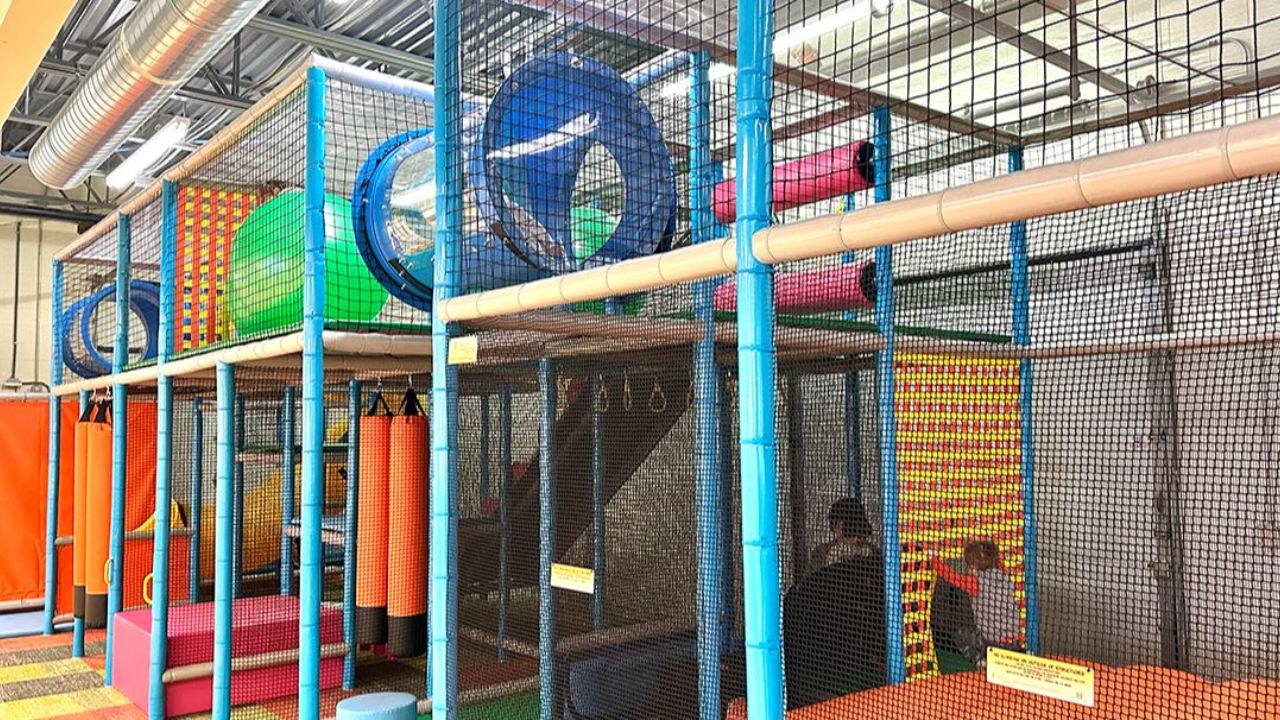
Operating a larger-than-average play café introduces a very different set of challenges than opening a smaller, boutique space. In a recent episode of the Profitable Play Podcast, Kristina Lai, owner of Busy Bee Play Cafe, shared a candid look at what it actually takes to run an 8,500-square-foot play café sustainably.
Her insights are especially valuable for owners who are scaling, considering expansion, or managing increasing complexity as demand grows. Below are the most important operational and leadership takeaways from Kristina’s experience.
1. Scale Changes the Job—Not Just the Square Footage
One of Kristina’s clearest points was that growth doesn’t simply add more guests—it fundamentally changes the owner’s role.
In the early days, she was primarily front-of-house, troubleshooting daily operations and refining flow. As the business matured, her role shifted almost entirely to:
-
Communication and email management
-
Process improvement and planning
-
Supporting managers rather than running shifts
This transition is not optional at scale. Larger spaces require owners to move out of constant execution and into coordination, oversight, and decision-making.
2. Larger Teams Require Clear Role Separation
With staffing levels fluctuating between a small core team and more than 20 employees during peak seasons, Kristina emphasized the importance of defined roles.
Key lessons included:
-
Managers should own specific functions (e.g., parties, inventory, or staff oversight)
-
Not every high-performing employee should take on every responsibility
-
Scaling back roles can be just as important as adding them
Attempting to stretch one person across too many responsibilities led to burnout. Focusing managers on what they do best improved both performance and morale.
3. High-Volume Parties Only Work with Tight Systems
Running 10+ parties per week—sometimes multiple at the same time—requires extreme predictability.
Kristina shared that party success depends on:
-
Standardized booking workflows
-
Fixed party schedules with no improvisation
-
Advance prep completed days ahead of the event
-
Clear expectations for hosts, families, and staff
Importantly, Busy Bee learned where the ceiling was. Attempting to run three simultaneous parties proved unsustainable, leading to a deliberate decision to reduce capacity and repurpose space. Scaling back, in this case, improved overall performance.
4. Capacity Management Is Essential to Guest Experience
As demand increased, Kristina transitioned to a reservation-based open play model—not to limit access, but to protect experience quality.
Key takeaways:
-
Capacity should be based on comfort, not just fire code
-
Reservations reduce chaos and parent frustration
-
Memberships become more valuable when they guarantee access
Kristina also highlighted that reservations help set expectations before families arrive, reducing conflict and dissatisfaction on busy days.
5. Not All Revenue Is Worth Keeping
One of the most candid parts of the conversation centered on member and guest misalignment.
Kristina explained that:
-
Some families are simply not a good fit for the space
-
Behavioral issues often stem from mismatch, not malice
-
Delaying hard conversations negatively affects staff and other guests
Addressing problems early—rather than tolerating them indefinitely—led to a healthier environment for both employees and families.
6. Revenue Diversification Brings Stability—If It’s Managed Intentionally
Busy Bee Play Cafe generates revenue across open play, parties, memberships, balloons, café sales, and retail. Kristina noted that diversification provides resilience, but only when each stream is actively monitored.
Key insights:
-
Balloon services became a meaningful revenue driver due to local market gaps
-
Café sales, while a smaller percentage, contribute significantly over time
-
Not every new idea should be launched immediately—timing and capacity matter
Kristina emphasized evaluating effort versus return, rather than chasing growth for its own sake.
7. Ownership at Scale Can Be Emotionally Demanding
Perhaps the most understated but important takeaway was the emotional load of running a larger operation.
Kristina spoke openly about:
-
Feeling perpetually “on call”
-
Carrying responsibility for staff safety and well-being
-
Managing the mental toll of constant decision-making
Her experience underscores the importance of boundaries, delegation, and realistic expectations—especially for owners with families.
Final Thoughts
Kristina’s experience highlights an important truth: larger play cafés offer more opportunity—but also demand more structure, discipline, and leadership.
Scale amplifies both strengths and weaknesses. Systems, boundaries, and role clarity are no longer optional—they are foundational. Her journey provides a realistic, grounded look at what sustainable growth actually requires and why thoughtful operational design matters more than simply getting bigger.
For owners navigating growth, Kristina’s insights serve as a valuable reminder that success is not just about capacity—it’s about control, clarity, and long-term sustainability.

