
7 Pieces of Indoor Playground Ownership Advice I’d Give Heading Into 2026
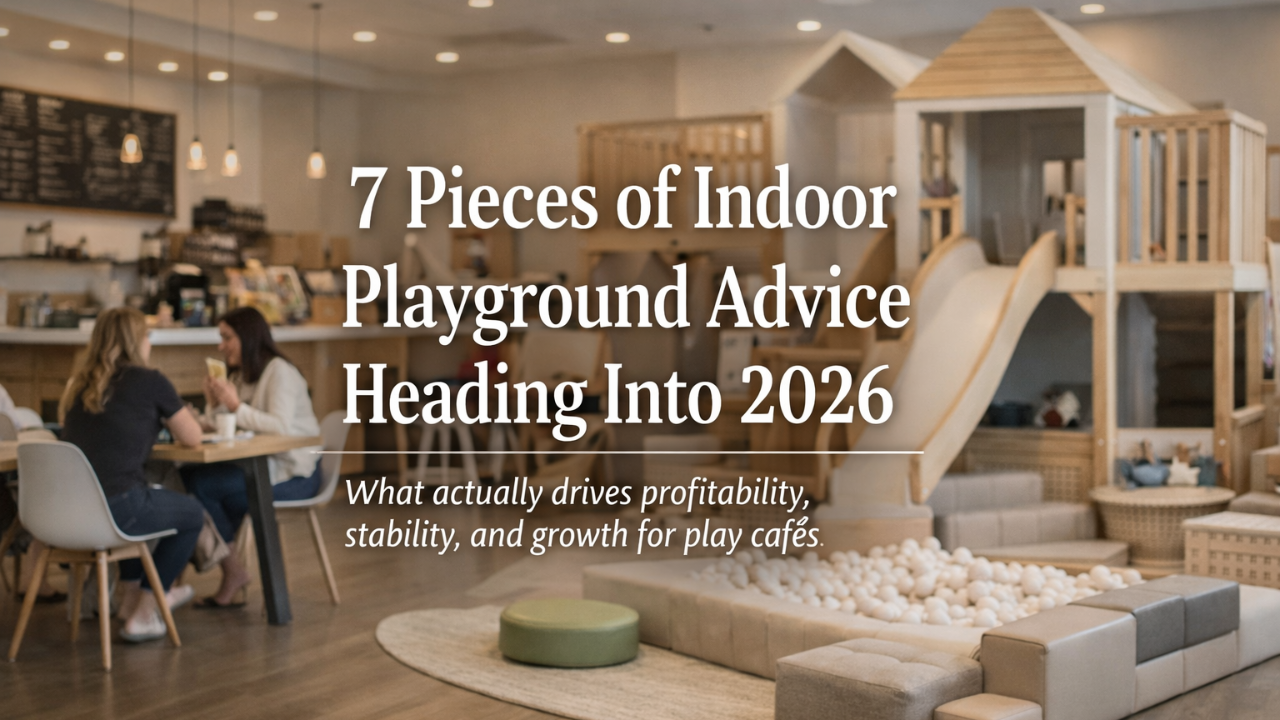
7 Pieces of Indoor Playground Advice I’d Give Heading Into 2026
After spending the past year in sustained conversation with indoor playground and play café owners across the country—across different states, business sizes, and stages of growth—one pattern became impossible to ignore. While the businesses themselves varied widely, the challenges behind the scenes were strikingly consistent.
The same stress points surfaced again and again. The same operational bottlenecks appeared across markets. The same wins emerged, often followed by the same regrets about what owners wished they had addressed sooner. Some operators were brand new and overwhelmed by the sheer number of decisions they were facing. Others were years into ownership, outwardly successful, yet quietly exhausted by how dependent the business felt on them personally.
Over time, those conversations led to a clear conclusion: long-term success in this industry has far less to do with chasing what is new and far more to do with strengthening what already matters.
The owners who felt most confident heading into the next year were not the ones reacting to every new idea or trend. They were the ones who had reinforced their foundations.
This article is not a predictions piece and it is not a trends report. That will be coming shortly!
Instead, it is a distillation of the seven principles that consistently separated businesses that felt stable, intentional, and scalable from those that felt reactive and fragile. Each point is grounded in real-world observation—what repeatedly worked across markets, and what quietly drained owners when left unaddressed.
Trends will always come and go. Foundations do not.
1) Your Social Media Needs This 1-Minute Audit
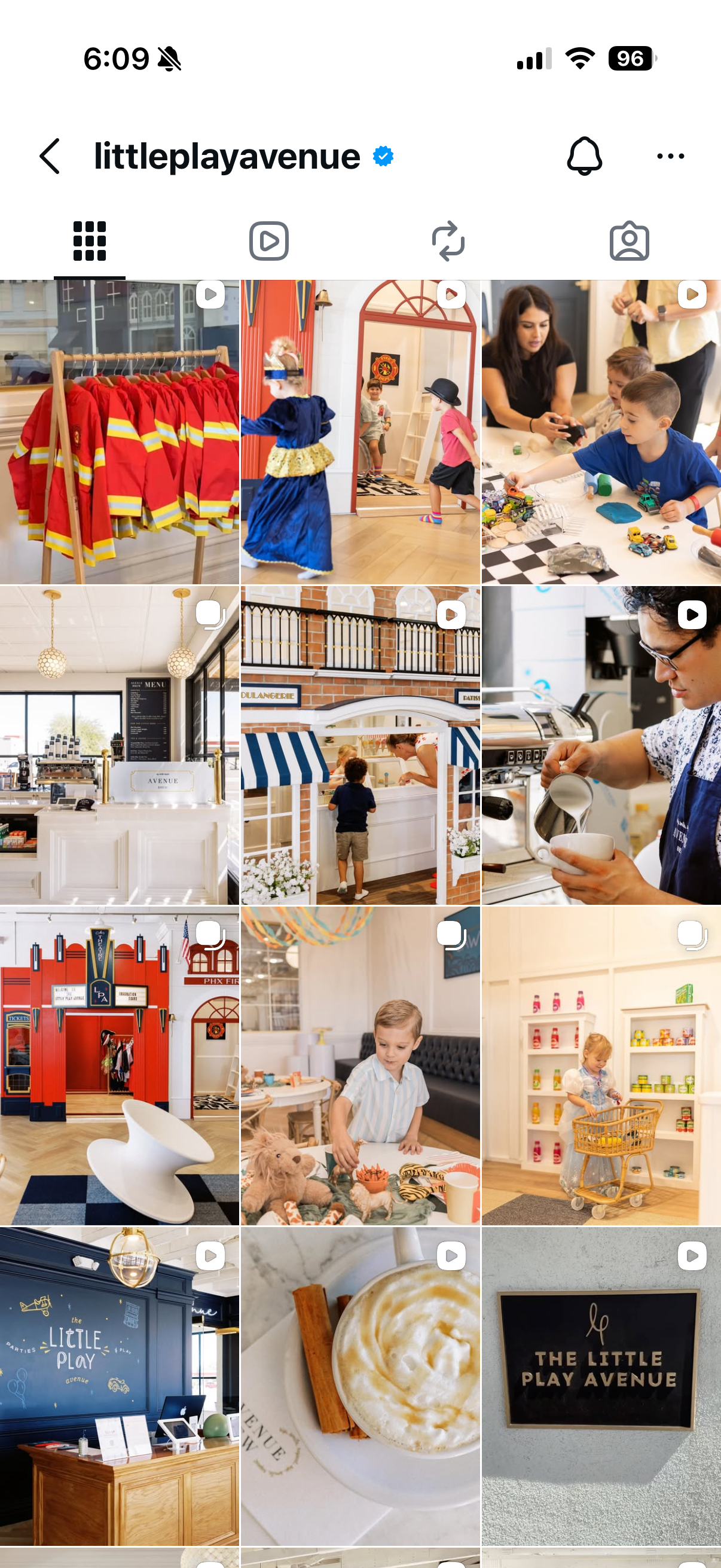
If potential customers cannot quickly and clearly see what your space looks like online, your business is effectively invisible—regardless of how often you post.
For indoor playgrounds and play cafés, visibility is visual. Instagram, your website, and your Google listing should immediately communicate what families can expect when they walk through your doors. That means real photos of your space, taken with intention. Not generic graphics. Not Canva quotes. Not educational posts from months ago. And not content filmed in cars or at home where the play space itself is barely visible.
Parents are not scrolling social media to read. They are evaluating. They are deciding whether a space looks clean, safe, engaging, and worth the effort of packing up children and leaving the house.
This industry has a structural advantage that most businesses simply do not. Play spaces are naturally eye-catching. Bright colors, movement, scale, children playing, and large structures are inherently scroll-stopping. A law firm, a dentist, or a service-based business must manufacture visual interest. Indoor playgrounds already have it.
And yet, that advantage is consistently underutilized.
When someone lands on your website or social profile, it should be immediately obvious what your facility looks like. Not after scrolling for thirty seconds. Not after clicking through multiple pages. Immediately. Visitors should not have to infer, piece things together, or guess based on partial images.
Behind the scenes, it is remarkably common to search for a clear, wide photo of an owner’s play space and come up empty-handed after checking Instagram, the website, and the Google listing. In some cases, there is simply no usable visual representation of the space at all. When that happens, the opportunity to feature or recommend the business disappears entirely.
In an experience-driven industry, that is a serious liability.
Professional photography is not optional—at least not for your website. If you do not actively control the visual story of your business, third-party platforms will do it for you, often through poorly lit, awkwardly angled phone photos taken on busy days. That is rarely the first impression you want families to have.
For owners who feel they are showing up consistently online but still struggle with bookings, visuals are often the first place worth examining—not captions or algorithms, but the clarity and quality of the visual representation of the space itself.
2) Your Website And Booking Flow Are Costing You Money
Many owners assume their marketing is the problem when bookings feel inconsistent or slower than expected. Instagram is blamed for not converting. Ads are dismissed as ineffective. The sense that “we’re doing all the right things and nothing is working” becomes common.
In reality, the issue is often not marketing at all. It is what happens after someone clicks.
Most indoor playground websites are DIY’d, poorly optimized for mobile, and frustrating to use. This matters because parents are almost always booking on their phones—while sitting in car lines, on the couch after bedtime, or between responsibilities. They are not navigating a website with time to spare or patience for friction.
Evaluating a website properly means opening it on a phone and experiencing it as a first-time visitor. Is the text readable without zooming? Is it immediately obvious where to click? Does the booking flow make sense? Does it take too many steps? Does the user have to think?
Parents make decisions quickly. If the process feels confusing or annoying, they leave.
This problem is compounded by the tools many owners rely on. A significant number of booking systems were not designed for indoor playgrounds or play cafés. Owners end up patching together multiple platforms: one for bookings, another for waivers, another for memberships, another for text messaging, and another for customer profiles. None of these systems communicate seamlessly, and none are optimized for how families actually book, visit, and return.
The result is friction at every step. Customers feel it, and owners absorb it manually by answering questions, fixing mistakes, chasing waivers, and explaining policies. Every additional click and every moment of confusion increases the likelihood of abandonment.
You do not need more traffic if your booking experience is leaking conversions. Even modest improvements—particularly on mobile—can significantly increase revenue without increasing marketing spend or workload.
Marketing is rarely the issue. The booking experience is.
3) You Need To Stop Relying So Heavily On Open Play (And Why That Mistake Can Ruin Your Quality of Life As An Owner)
Open play is important, but it should not be the engine of an indoor playground business.
When owners rely on open play for more than roughly fifteen percent of total revenue, they often find themselves living week to week. Weather affects attendance. School schedules disrupt patterns. Illness and holidays introduce volatility. Revenue becomes unpredictable, even when the space feels busy.
Throughout the year, many owners described being fully booked on the floor while still feeling financially stressed. In nearly every case, the root issue was overreliance on single, unpredictable transactions.
Owners like Jayci of Tiny Play Café recognized that open play alone could never create the stability she wanted. Once she stopped treating it as the primary revenue driver and intentionally scaled other areas of the business, predictability improved and decision-making became less reactive.
The same pattern appeared with Justine of Liv & Mimi’s Play Café, where open play introduced families, but true stability came from diversifying revenue streams within the space.
Sierra Zagarri of Grandma’s Playroom provides another clear example. By expanding into events, parties, business sponsorships, and retail, her business reduced dependence on a single traffic pattern or season.
Open play remains a valuable component of the ecosystem, but it is not a foundation. When it becomes the primary revenue driver, owners are forced into reaction mode instead of planning mode.
4) Focusing On Recurring And High-Ticket Revenue Changes Everything
Once owners accept that open play cannot be the engine of the business, the next response is often uncertainty. If not open play, then what?
This is where recurring and high-ticket revenue move from being “nice ideas” to becoming stabilizers.
When Alera Owens of Project Play shared her microschool model at Play Maker Society LIVE 2025, what stood out was not just its success but its intentionality. Enrollment was planned. Capacity was capped. Revenue was forecastable. That predictability fundamentally changed how decisions were made.High-ticket revenue plays a similar role when designed intentionally. Jayci’s party offerings at Tiny Play Café shifted the financial dynamics of her business once they were structured, packaged, and priced with purpose rather than customized or dependent on her presence.
Georganne of Mama’s Play offers a strong example of premium positioning done deliberately. Her best-selling party package is her luxury, all-inclusive option—not the lowest-priced tier—because the brand, décor, equipment, and overall experience support that choice from the moment families walk in the door.
Recurring and high-ticket revenue smooth volatility, reduce reliance on walk-ins, and provide something concrete to plan around. This shift marks the transition from survival to operation.
5) Email And Simple Ads Should Be Doing More Of Your Heavy Lifting
Email remains one of the most underutilized tools in the indoor playground industry.
Inside Play Maker Society, Alicia of Gentle Hands consistently identifies email as her highest-ROI marketing channel—not social media or paid ads.
Similarly, Jessalyn of The Playroom WV has shared how email quietly supports events and customer communication, reducing reliance on frantic posting and last-minute reminders. That was her biggest takeaway from our Play Makers Society Live event in 2025, in fact.
Email is not about constant promotion. It is about nurturing an audience that has already shown interest. Automated welcome sequences ensure new customers understand how the space works, what is available, and how to return—without manual effort.
Simple evergreen retargeting ads, particularly for parties and memberships, reinforce this system quietly and effectively. When email and automation are in place, marketing feels calmer and revenue feels less emotional.
6) Increase Spend Per Visit Before Chasing More Traffic
Before increasing traffic, it is essential to maximize the value of each visit.
Kate Mitchell of Funtown Play Café relies heavily on her café to increase spend per visit. Food increases dwell time, and dwell time increases spending.
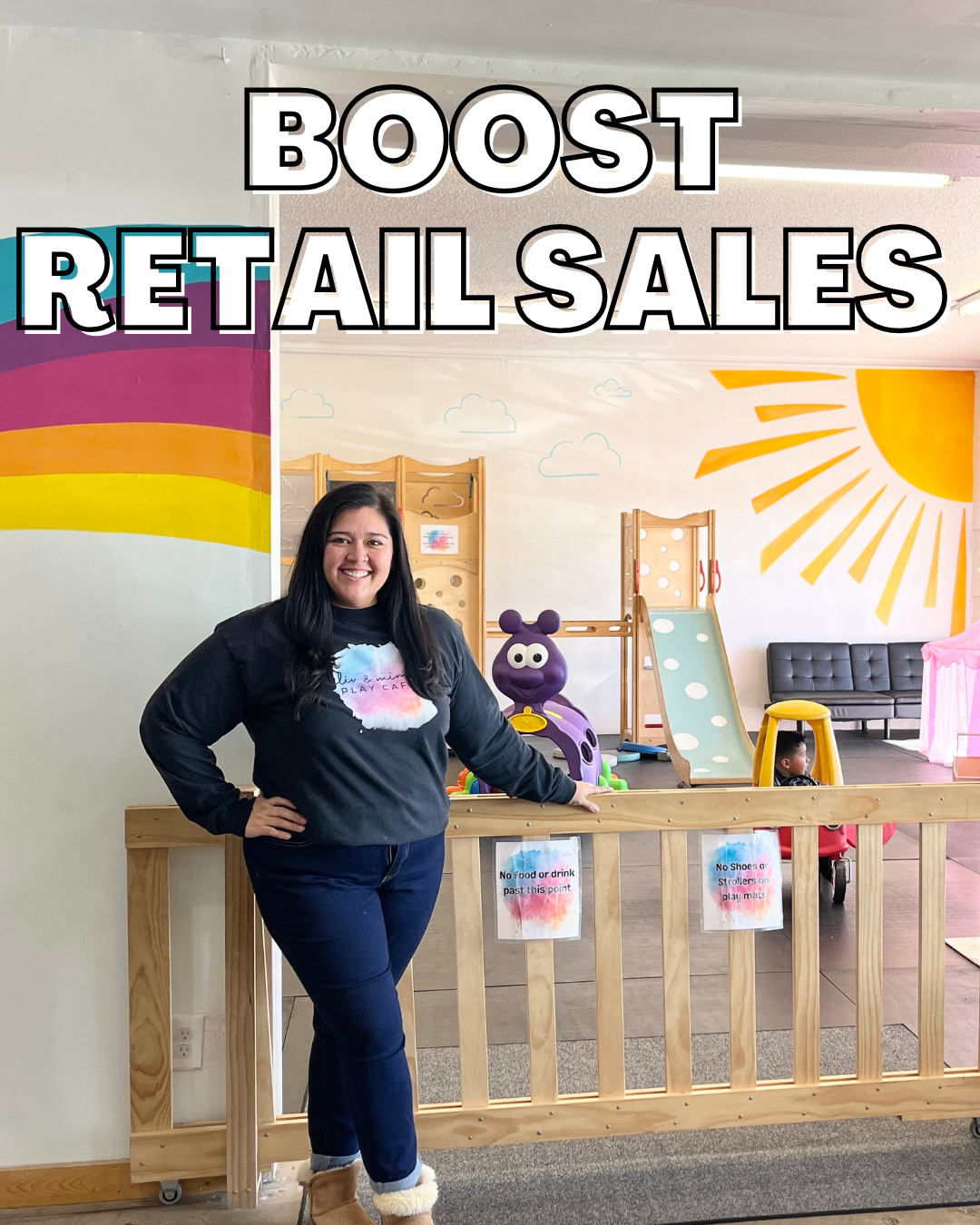
At Liv & Mimi’s Play Café, curated retail plays a similar role by aligning with the customer mindset and increasing transaction value naturally.
Tal Thompson of The Art Factory & Party Place, a Play Maker Society LIVE 2026 keynote speaker with eleven years in business, layers a full café with small, high-margin add-ons such as balloons on a stick and beanie babies.
Kristina of Busy Bee Play Café combines café revenue with a balloon bar that enhances the experience while increasing spend organically.The most effective upsells do not interrupt the experience; they extend it.
7) You Are Too Involved As The Owner—And Systems Are The Way Out
A business that cannot operate without its owner is fragile.
Jayci’s experience at Tiny Play Café illustrates this clearly. Living forty-five minutes away from her location required the business to function without constant owner presence. Clear systems, defined boundaries, and empowered staff replaced dependence on real-time decision-making.
Automation does not remove care. It removes friction.
This reality is why Module 8 of Play Café Academy was JUST completely revamped and re-recorded with this in mind—to help owners reduce dependency, empower teams, and build consistency without serving as the glue holding everything together.
Stepping back is not abdication. It is design.
Most owners do not need more ideas. They need fewer leaks.
A full 2026 trends breakdown is coming, but trends only matter when the foundation underneath them is solid. When these seven principles are addressed intentionally, chasing becomes unnecessary.
And that is the goal.
About The Author

Michele Caruana
Play Cafe Academy Founder & Blog Author
I have over a decade of hands-on local business experience and tough lessons under my belt, and I am passionate about helping current and prospective play based business owners AVOID the same mistakes myself and SO many other business owner's make. Even though I have a Master's Degree in Economics and Years of Business and Marketing experience, it took me YEARS to "crack the code" and turn my Indoor Playground from an expensive hobby into a business-- and I want to get YOUR business get there in less time and with much less stress.
Recent Posts
Categories
All Categories